Product Design
Harvard Online - Mobile App Concepts
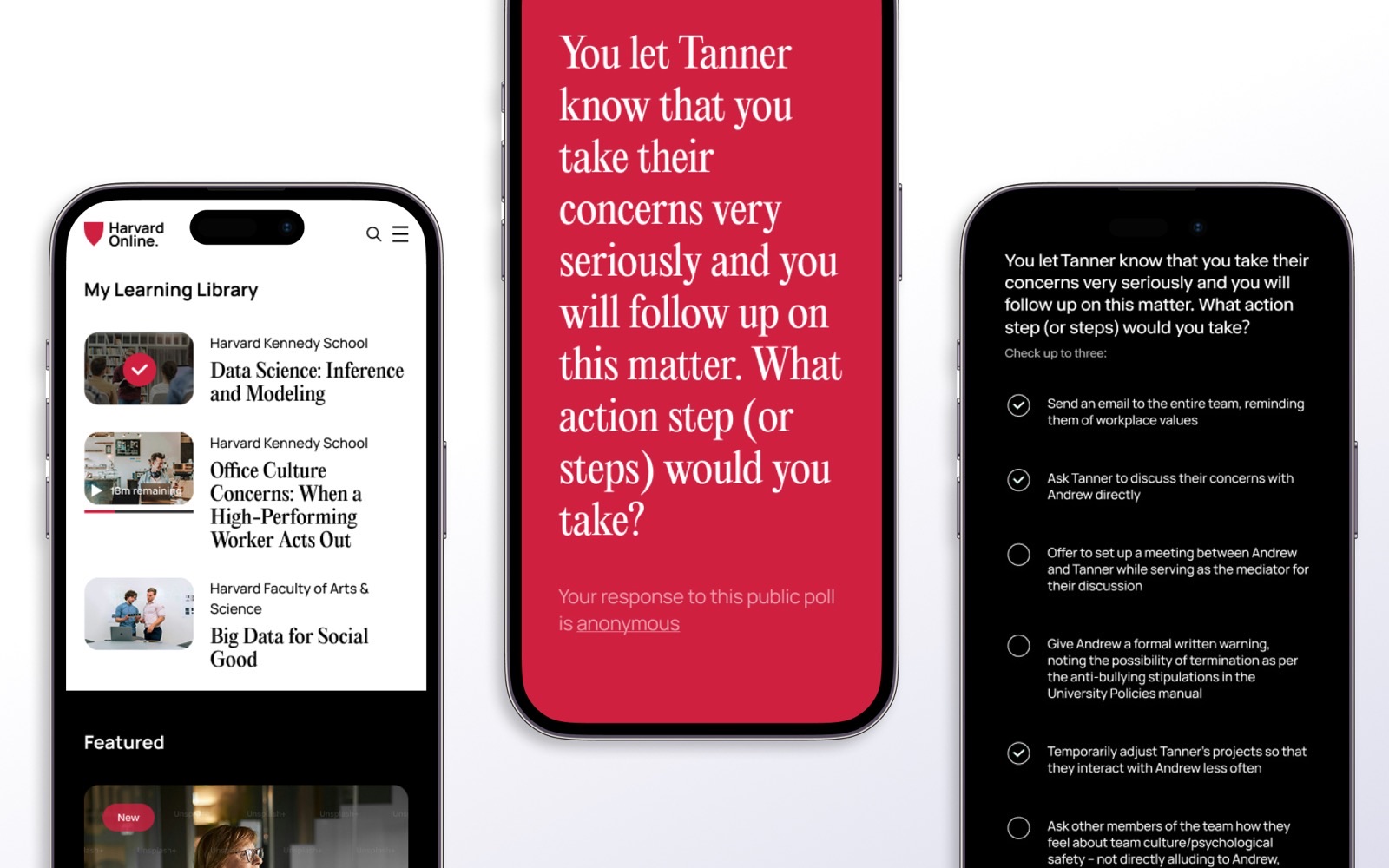
Two mobile app concept directions for short-form Harvard learning - immersive narrative design for 15-minute case studies.
The Client
Harvard’s Office of the Vice Provost for Learning (VPAL) oversees initiatives that advance teaching and learning across the university. They had a vision for a mobile app, not the full-length online courses Harvard already offered, but something lighter and more immediate.
The Problem
VPAL had identified a market opportunity for short-form content: 15-minute case studies, brief lectures, and quick-hit lessons across business, law, economics, and data science, and wanted to investigate building a dedicated mobile app. The existing Harvard Online platform was built for multi-week courses with deep engagement. What VPAL wanted was fundamentally different: pick up your phone, choose a topic, spend 15 minutes with something smart, answer a few knowledge checks, and move on with your day. That’s a different product, not just a responsive version of what already existed.
The Approach
I developed two concept proposals exploring different interaction models for mobile-first learning, then presented both as fully realized directions so the team had a meaningful choice. The stronger concept (and the one I pushed for) was an immersive, narrative-driven experience that treated each case study like a story rather than a course.

The Solution
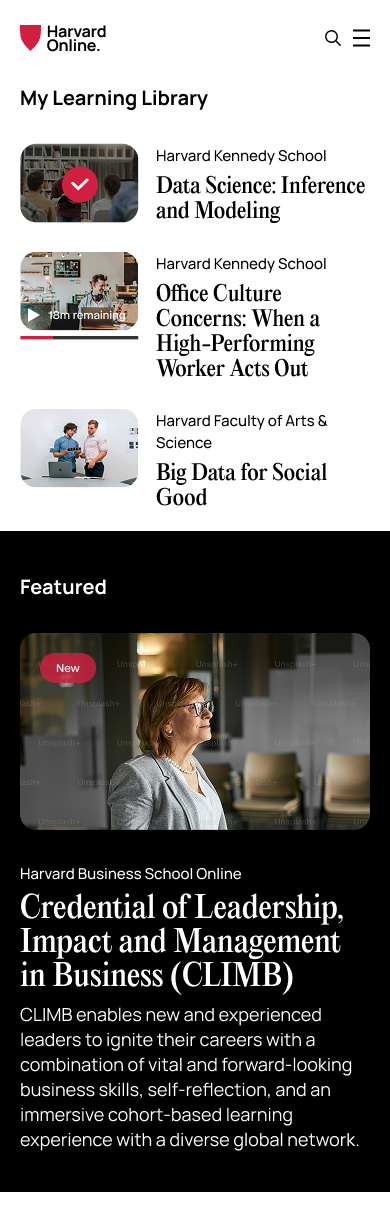
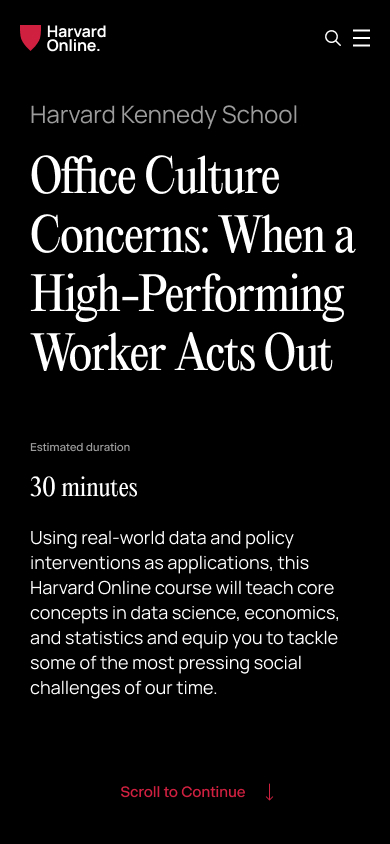
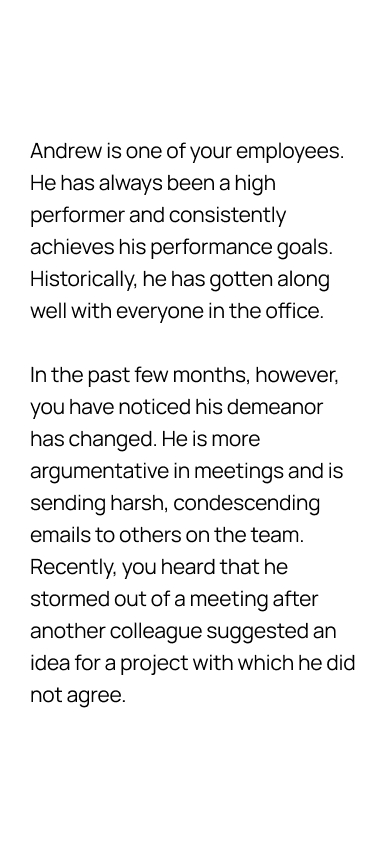
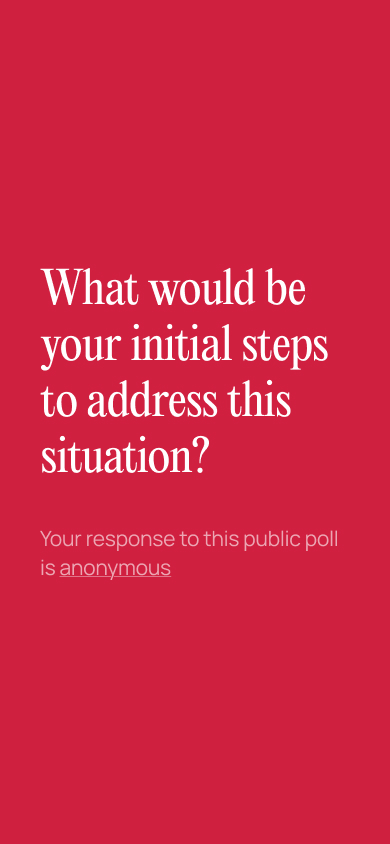
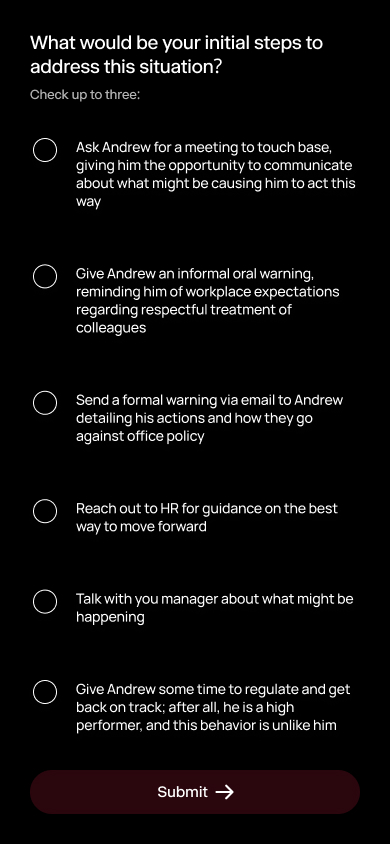
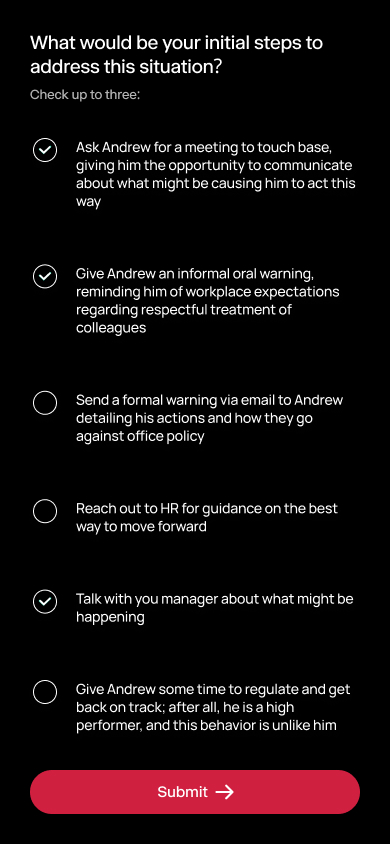
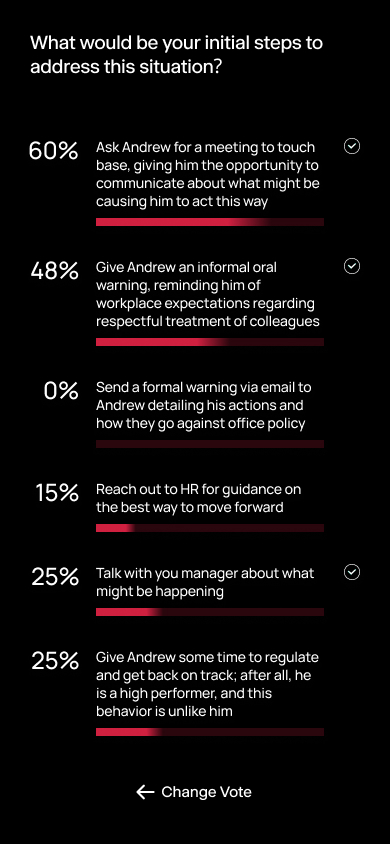
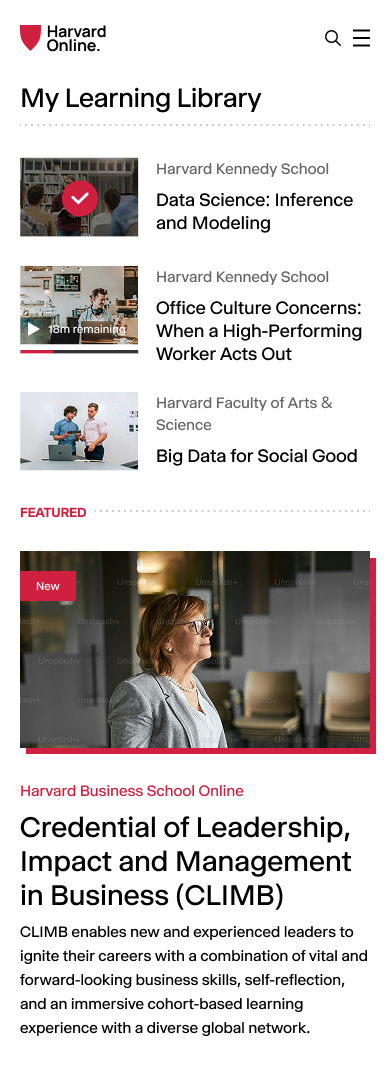
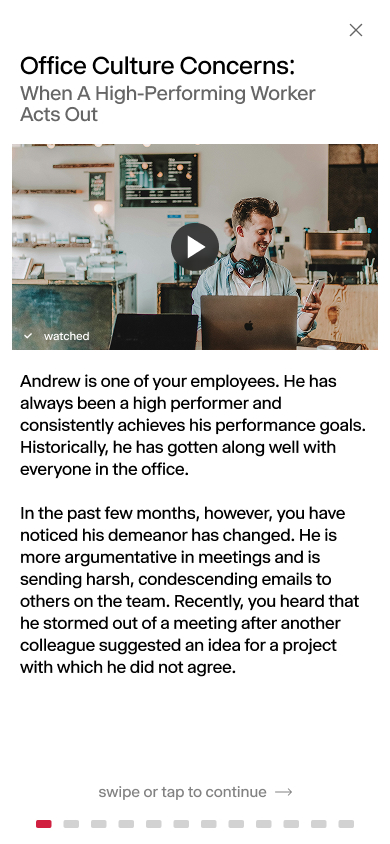
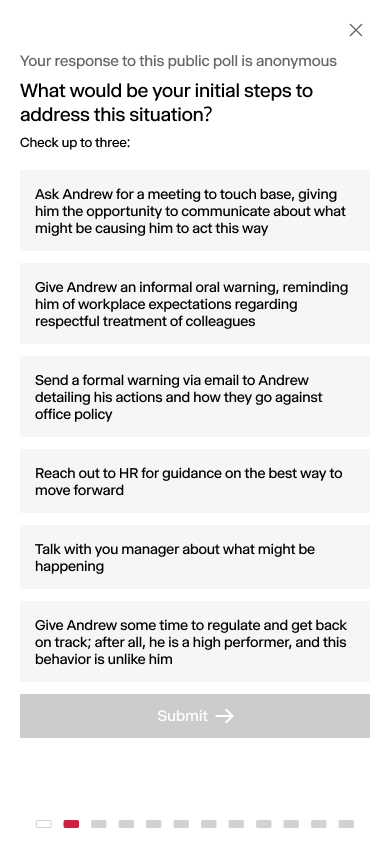
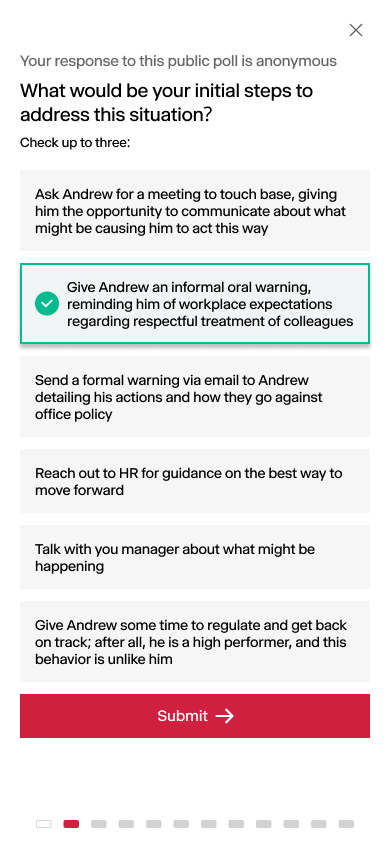
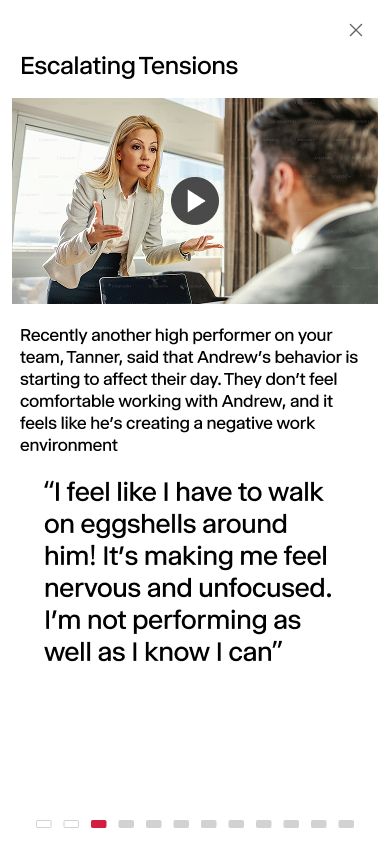
The primary design transforms each case study into a swipeable narrative. Dark backgrounds, large typography, and full-bleed imagery create an experience closer to a well-designed editorial app than a traditional LMS. Learners move through content at their own pace, with knowledge checks appearing as interactive polls that show how peers answered, turning solitary learning into something that feels social. The library and recommendation screens give learners a clear path from “I have 15 minutes” to “I’m learning something from Harvard.”
I also explored a second direction, a lighter card-based approach with white backgrounds and more utilitarian navigation, which served as a useful contrast and helped the team articulate what they wanted the experience to feel like.
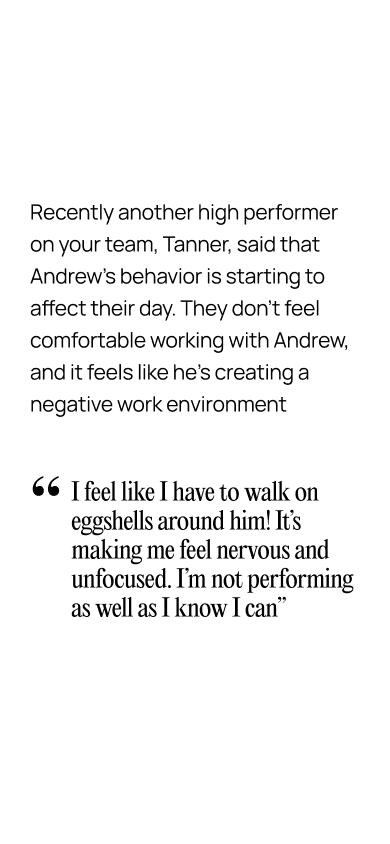
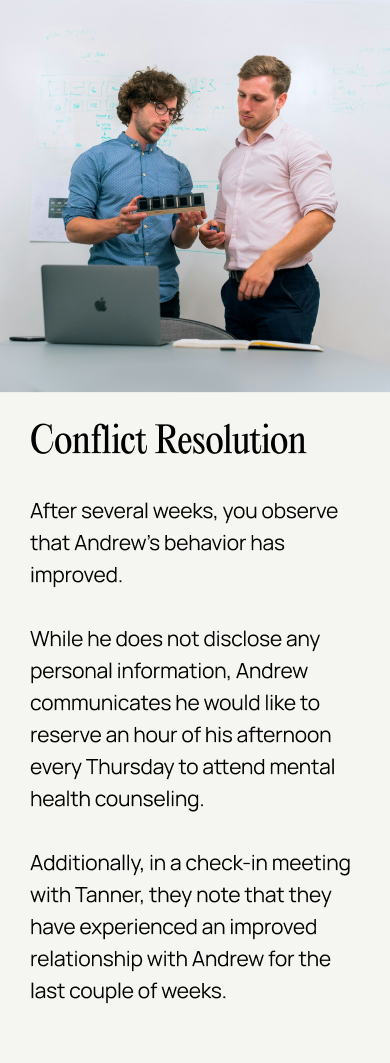
Concept A - Immersive narrative: swipeable case studies with dark backgrounds, large typography, and peer-response polls.
The Result
The immersive concept proved that short-form educational content with embedded knowledge checks could feel truly native to mobile: simple enough for 15 minutes, polished enough for Harvard’s name. The work gave VPAL a tangible vision for expanding beyond traditional online courses and informed their strategic planning for mobile-first content delivery.